Download the 2011 Excel spreadsheet (in German) of camps and camp info: AustriaCampsV7.xls provided by Klaus.
Austrian archives - https://www.oesta.gv.at
Tabor - Steyr
Tainach-Stein - Kärnten; British zone;
Talacker - See Judenburg; British zone;
Talerhof
concentration camp 20 miles from Graz,
Austria. On the map Forst (forest) Thalerhof. The railroad station was southeast
of the camp.
Here's a map of Abtissendorf and Thalerhof camp:
http://lazarus.elte.hu

"During the First World War, internment
camps were set up, mostly for Serbs and other pro-Serbian Yugoslavs. Men, women,
the children and the elderly were displaced from their homes and sent to concentration
camps all over the Empire such as Doboj (46,000), Arad, Gyor, Neusiedl am See."
From: http://www.danceage.com or
http://en.wikipedia.org/wiki
Some 20 thousand pro-Russian Ukrainians were incarcerated in concentration camp Talerhof (Austrian province of Styria) from September 4, 1914 until May 10, 1917. A full third of the prisoners held died.
"The people who lived on the northern
slope of the Carpathian Mountains (Lemkovyna), which is now in Poland and was
once part of the Austro-Hungarian Empire, have been subjected to severe and
much discrimination throughout many centuries. They have been forcibly relocated
and efforts have been made to eradicate all elements and traces of their distinctive
culture."...
"As they stumbled from the train into the sunlight, they found themselves
surrounded by guards riding on horses. They were forced by whips to walk
in their weakened condition to Talerhof, a concentration camp which was
about a 20 minute walk away. The guards carried whips and did not
hesitate to use them on those who lagged or fell behind. Those who tried
to escape were shot dead and their bodies were pushed into any
convenient ditch to join the bodies of those who had succumbed to the
brutal conditions."
From: http://www.carpatho-rusyn.org
10/24/06
I suspect the writer is mixing up WW II concentration
camps with the WW I ones. Admittedly the first were a
prelude to the second. The second type were (bad
German) vernichtungs lager- extermination camps,
while the first were internierten lager- internment
camps. Admittedly conditions were bad and the
Thalerhof mausoleum in the Feldkirchen Church cemetery
admits to nearly 2,000 deaths, I have never ever read
about or seen first person memoirs about "gas or
medical experiments." If you have some real
information on this I'd like to have it. The Austrians
may have been bad but they were not yet Nazis.
I do speculate that in WW II some of the Nazi officers
in the Carpathian Region were in fact from annexed
Austria and they delivered some pay-back for being
driven out in 1918. But I have no proof of this, it is
speculative. Paul Best, email: merida@snet.net
Thalerhof by Jon W. Madzelan
http://www.lemko.org
Hawker Hunter J-4094
Osterreichisches Luftfahrtmuseum (stored), Graz/ Thalerhof, Austria
http://www.thunder-and-lightnings.co.uk
Tessendorf - Kärnten; British zone;
Thalheim - in Germany
Thalheim - Aagau Switzerland;
Thalheim - camp 537; Styria, Austria; St Georgen Attergau; Lungenheilstätte; US zone;
Theodor Körner Strasse 100 - Graz; British zone;
Tiktring, British zone team 332? - Klagenfurt
Archive: Tiroler Landesarchiv, Michael-Gaismair-Strasse 1, 6010 Innsbruck
Tel: + 43 (512) 508 3502
Fax: + 43 (512) 508 3505
http://www.tirol.gv.at/schule3.htm
Bistum Innsbruck, Diözesanarchiv, Domplatz 6, Postfach 582,
6021 Innsbruck
Provinzarchiv der Nordtiroler Kapuziner, Kaiserjägerstr.
6, 6020 Innsbruck
Stift Wilten, Archiv, Klostergasse 7, 6020 Innsbruck
Universität Innsbruck, Universitätsarchiv, Innrain 52,
6020 Innsbruck
Traboch - British zone;
Treffen - US zone;
Treffling, Land Steiermark; British zone or Swiss zone; Kärnten; near Spittal on the Drau River; Linz
See Kärnten archives.
Municipal office: Stadtgemeinde Spittal an der Drau
Burgplatz
A 9800 Spittal an der Drau
Tel: 0043 4762 5650 - 0
Fax: 0043 4762 5650 -156
Email: spittal@ktn.gde.at
"1945: Up to the end of war offer resistance against the terror of the Nazi regime, decided communist inside, to that its expression about also in the "Muehlviertler hasenjagd" finds and the KPOe brings large victims, approximately 160 communist inside come into upper Austria in the resistance around the life.... Death march of the Hungarian Jews (A Computer translation from Chronology of Teffling
Trieste has its own page.
Trofaiach has its own page, near Leoben, Steiermark; British zone; Ukrainians, Jews;
See also Miff Crommelin's Trofaiach website: http://www.crommelin.org
Dear Olga,
I am from Argentine, and I have found your page after a long long search. Here, in my country, there is just a few information about the camps and all the history. I'd like to know if you could send me some information about Trofaiach camp, because I need it to know if my mother Juliana Stajdohar / Stajduhar was there between 1945-1948. She is from Slovenia. Please, any information send me it to lagrisel@yahoo.com.ar It's very important for me and my family, and you are the most important hope that I have in this moment. Thanks very much and sorry for my English. Julia Gonzalez
Dear Julia,
As I was doing research to help me translate my father's diary, I happened to come across the posting below which you placed on Olga Kaczmar 's web page. I was born in Trofaiach. My parents lived there during 1948-1949. I have lots of information about Trofaiach and would be glad to share that with you. John Zakelj St. Paul, Minnesota USA
Follow-Up: John, Miff and Julia have corresponded and have shared research. Great.
Tschinowitscher Weg - Villach; British zone;
U - Kapfenberg 2 - British zone;
Untergimplach - see Gimplach - Gai; Trofaiach; British zone;
Unterlaufenegg 29 - Deutschlandsberg; Styer; British zone;
Unterlaufenegg 31 - Deutschlandsberg; Styer; British zone;
Untermandling -- Pichl-Preunegg; British zone;
Ursulinenkloster - nunnery; Graz; British zone;
Viechtwang - camp 405; US zone;
Vienna has its own page.
archives
City Archive: Magistrat der Stadt Wien - MA 8 -
Wiener Stadt- und Landesarrchiv
Rathaus
A 1010 Wien 1
post@m08.magwien.gv.at
Tel: +43 (1) 4000-84808 and +43 (1) 400099-84819
Viktring, near Klagenfurt, refugees camped in muddy, tentless, plowed
fields. 6,000 Yugoslavs, UNRRA team 332; Kärnten; British zone;
"It's important to note that the Slovenes,
as a whole, were against Nazi Germany and never fought against the Allies; in
fact, Slovenes rescued shot-down Allied pilots.
"The repatriations took place in late May and early June 1945, shortly after the Allied forces moved into Austria from Italy. If it were not for Barre's compassion, a further 6,000 Slovene refugees - all civilians, including 3,550 women and children - would have met the same fate.
"The Slovene soldiers and civilians who managed to flee Tito's communist Yugoslav forces, by crossing Slovenia's northern border into Austria, sought and received refuge with the British military in Viktring.
"On May 19, 1945, the civilian refugee camp at Viktring was placed under the command of Major Barre from Allied Military Government (AMGOT). A 38-year-old Canadian officer, Barre quickly grew fond of the Slovene inhabitants of his camp.
"On May 23, Allied Forces Headquarters told the Fifth Corps in Viktring that all Slovene soldiers were to be sent to Italy. With assurances of their safety, the unarmed soldiers initially went willingly - until the night of May 26 when a repatriated anti-Communist Serbian soldier returned to the camp with a horrifying first-hand account of the repatriates' true fate at the hands of Tito's Communist partisans. .. continued
Yugoslav Refugees in Camps in Egypt and Austria 1944-47 by John Corsellis
1/16/2014 Hi Olga,
My parents were born in Slovenia, they flight with my grandparents in May 1945 through the Loibltunnel to Carinthia and stayed with 20.000 Slovenians on the fields in Viktring, when the British military promised to bring them to Italy. But the trucks go back to Yugoslavia and more than 12.000 Slovenian were murdered.
On June 29th, 1945, all refugees came from Viktring to DP camps in Spittal, St. Veit and Lienz/Peggetz. My father (12 years old) came with the first train to Spittal, my mother (8 years) came to Lienz and in November 1946 with all the other refugges from Lienz to Spittal.
My parents are still living in Spittal and are helping everybody, who wants to know something about the living in the DP camps near Spittal. There were camps in Treffling/Seeboden, in Seebach/Seeboden für TBC patients, in Feffernitz (german-speaking refugees), Kellerberg (Hungarian), Villach/St. Martin and specially in Spittal and Lienz/Peggetz. They help to get birth documents, to find the grave of grandparents, to show the locations.
On your website the DP camp Peggetz/Lienz is named for Slovenian, but all informations and fotos are from the Cossacks, the Cossacks cemetery and their meetings every year.
This camp was built in 1938 and was a camp for POW. In the days 5 – 8th May 1945 there came the Cossacks from Italy (Tolmezzo – Timau – Plöckenpass – Lienz), maybe there were more than 40.000 Cossacks in the Drau valley, soldiers with wives, children and horses.On June 1st, 1945 and the next days, the British military force them to get in the train – to send them back to the Russian cone at the bridge in Judenburg. The camp got empty.
On June 29th, trains stopped again near Peggetz. They brought more than 2000 Slovenians to stay in this camp for more than 16 months. Than they were brought to the DP camp in Spittal an der Drau.Now this area is an industry area. The Cossacks were here only 4 weeks, and the people in Lienz know the story of the massacre. But it is hard to find somebody who nothing about Slovenian in Lienz/Peggetz. This are only the essential informations.
We will be glad to get reactions from all over the world, especially from Slovenian refugees and there descendants. We also organized sightseeing tours in Carinthia and PowerPoint presentations about living in the DP camps.
SincerlyJohanna Kronawetter, born Starman johanna.kronawetter@aon.at
www.nakul.biz
Villach, Team 336; British zone; 2 camps: Villach on the Drau river and St. Martin on St. Martiner Strasse (district)
City Archive:- Stadtarchiv Villach
Widmanngasse 38
A-9500 Villach
Telephone: 43 (4242) 205 349
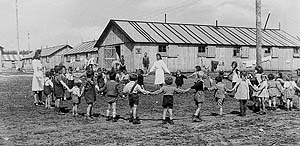
Villach Fellach kindergarten
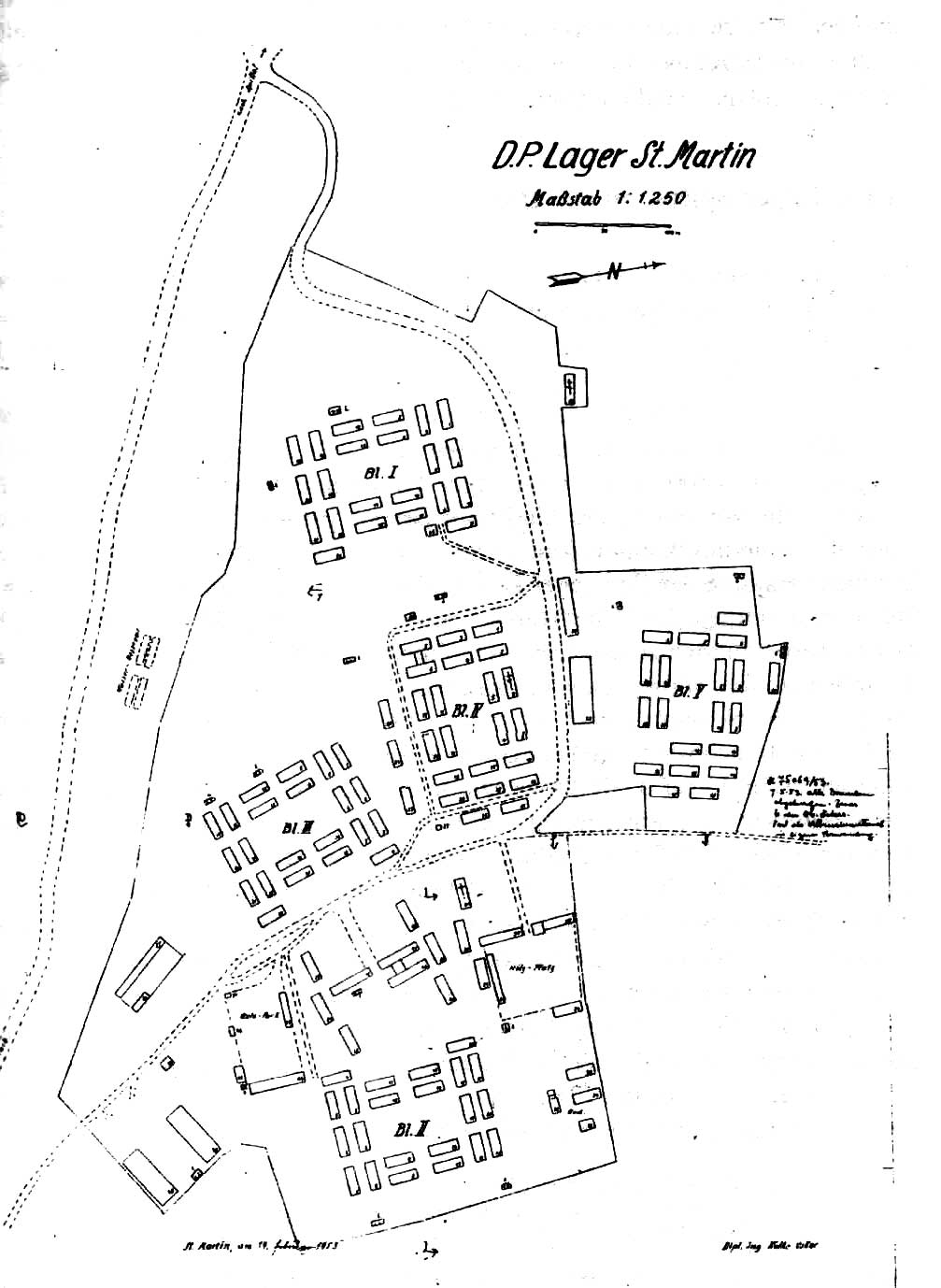
Map of Villach St Martincamp (source: Stieber)
submitted by Klaus Fohringer
Hello Olga,
I have posted a nice series of pictures of the Villach-St. Martin Refugee
Centre on my website which you may wish to link to. http://www.crommelin.org Regards, Miff Crommelin Miff Crommelin
Hello Olga,
I am delighted to find your website. I am searching for information about my Grandmother and my Mother who were in Villach St Martin from the years of 1944 to 1950. They had come there from Belaurus and I am in search of recovering our family stories. Would you be able to offer any information or assistance? Thank you, Blessings, Shaunessy Owen (Marchi)
Red Cross camps
My aunt was in charge of several camps in Austria, on behalf of the British Red Cross, first at Villach then in Vienna. She appears to have been for a while in overall charge of the British
run camps in Vienna. She was a prolific writer and I have a weekly letter from her to her mother throughout the 1945-6 period. I am preparing them for a project at my daughter's school. No-one apart from the staff is mentioned by name but the picture she describes of life in the camps is fascinating. Your advice on preparing these materials to be shared more fully by survivors of these times would be welcome. Peter Leevers
We hope to hear more from Peter in the future. Olga
1/1/06 Dear Olga,
You are the Mother Teresa of refugees. In May 1948, soon after fleeing from
Budapest to Vienna, I managed to slip into the British Zone at Muerzuschlag).
Naively I boarded a train to Salzburg where I thought a friend of mine
was. But I had absolutely no documentation and British MPs took me off
the train and politely escorted me to a transit camp at the outskirts of
Villach. I think I spent only about a week or less there while the Brits
established my political refugee status, etc. Now I wonder how could I
find out the name of this camp and locate someone whose memory is better
than mine about this place. Have you any suggestions? Will much appreciate
your advice in this matter...kind regards, the very best for the new year,
andrew dettre, e-mail andrew.dettre@bigpond.com
Villacherstrasse - Spittal an der Drau; Kärnten; British zone; Team 330;
Vöcklabruck - camp 501; US zone;
VOEST - Gelånde, Eisenwer; 50/53; subcamp; US zone;
Voitsberg- Lankowitz-Voitsberg; British zone;
Volkendorf - Villach; British zone;
Volkermarkt - Villach; British zone;
Volksgarten - transit camp; Franz-Josef Park, district Aigen? ; Salzburg; Jews; US zone
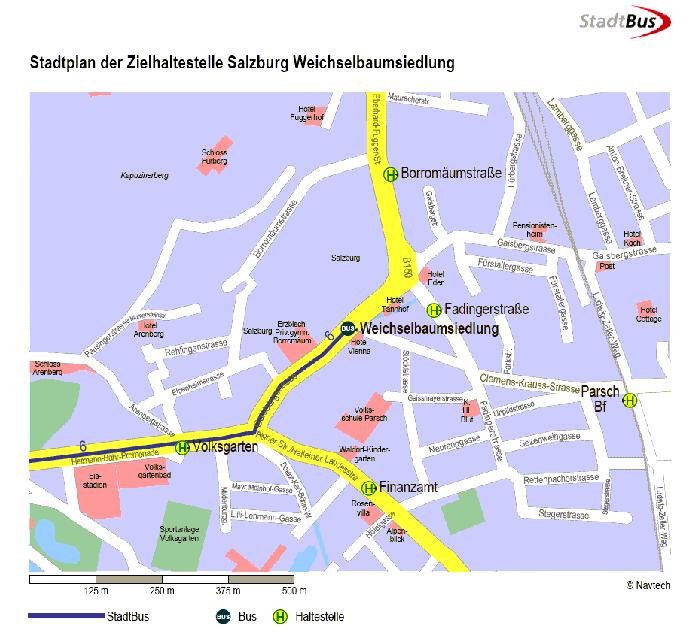
download photo to get full image - Salzburg, Umg. Volksgarten
Vorarlberg, Bundesland
Archive: Landesarchiv Vorarlberg
Kirchstrasse 28
A 6900 Bregenz
Tel: +43 (5574) 511-45005
FAX: +43 (5574) 511-45095
Vordernberg - Trofaiach; British zone;
Vorkloster, Bregenz, dp camp; L. Vorarlberg; French zone; Weidach (city quarter)
Vols / Wols, L. Upper Austria, (U.S.) See Wels below. Völs is a market town in the district of Innsbruck-Land in the Austrian state of Tyrol located at the western border of Innsbruck. It was mentioned for the first time in documents in 1188.
Wagna in Südsteiermark
or South Styria, see Leibnitz for archives.
Wagna is a municipality in the district of Leibnitz in Styria, Austria. The ancient Roman town of Flavia Solva lies near what is today Wagna.
Map: http://www.mapquest.com
Wagna-strass/ strass in Leibnitz
Photos submitted by Klaus Fohringer
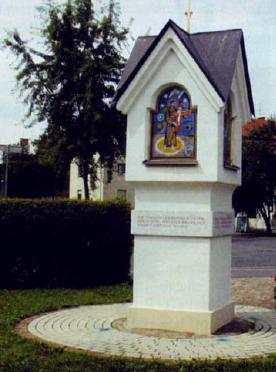
FL Wagna 1955 Gedenkståtte
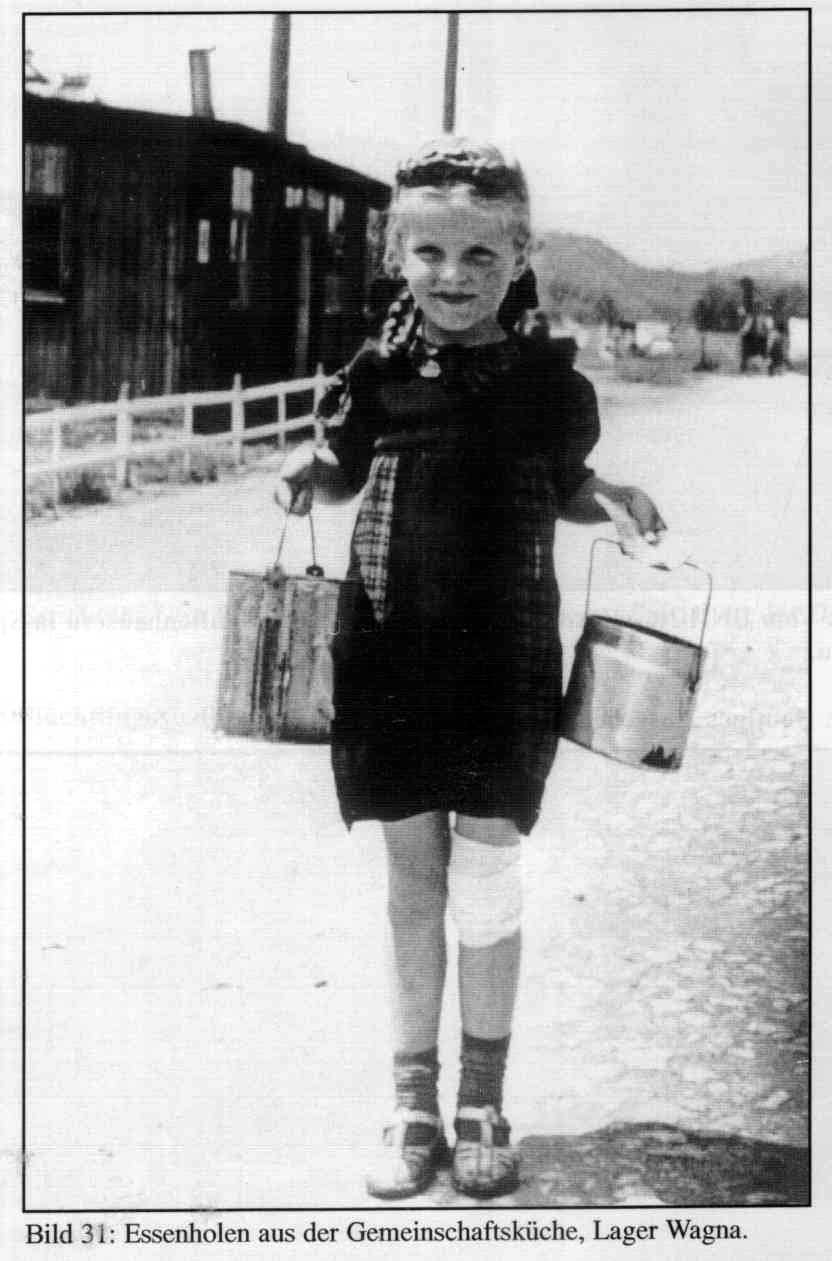
Getting food from common kitchen (source: Stieber)
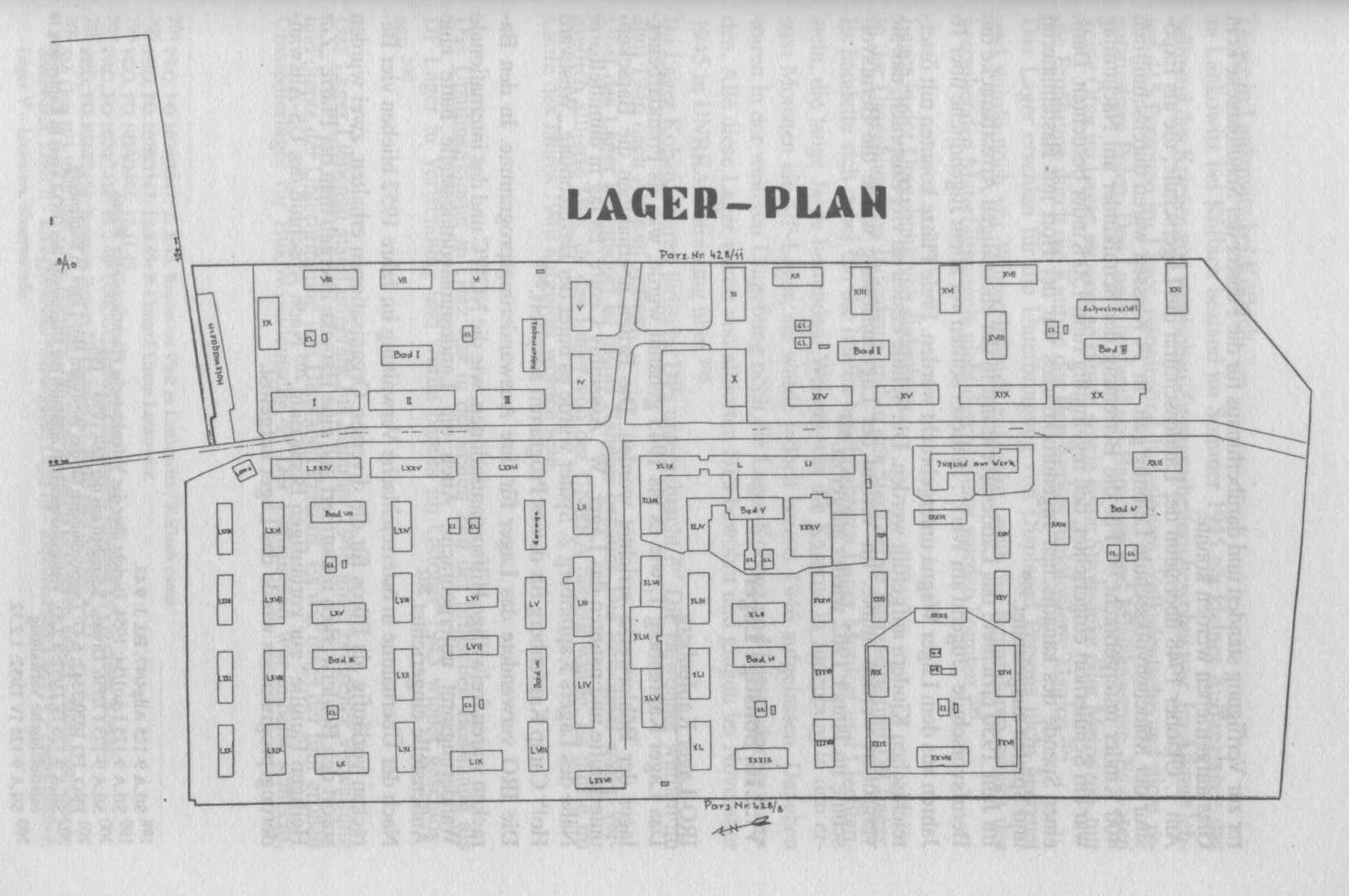
(source: Stieber)
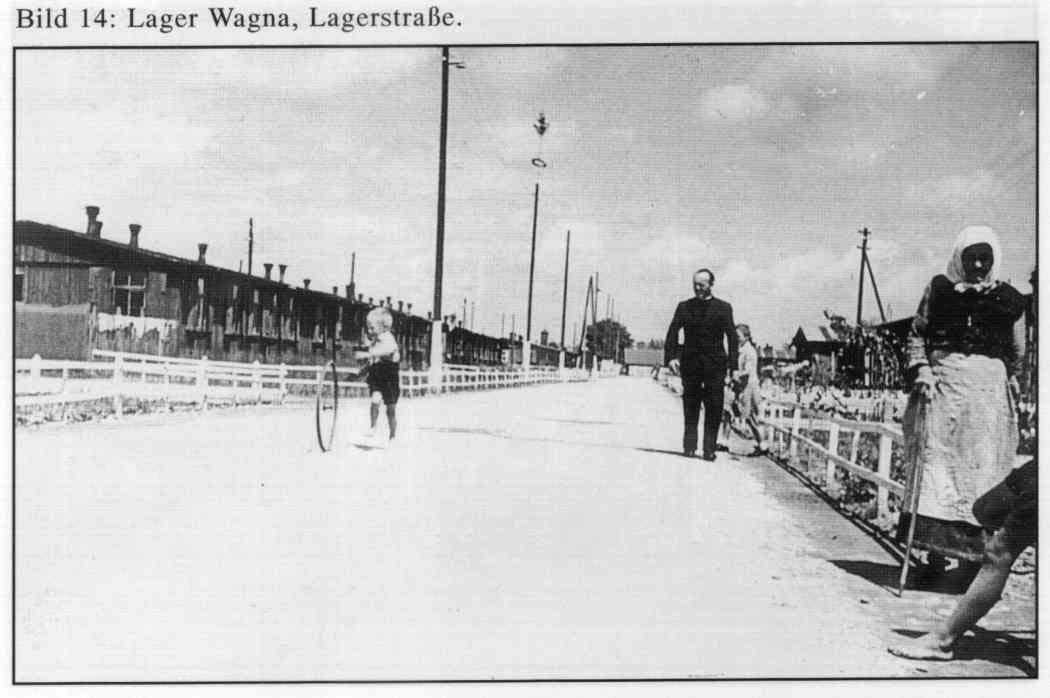
Lagerstrasse, Camp street in Wagna (source: Stieber)
(source: Stieber)
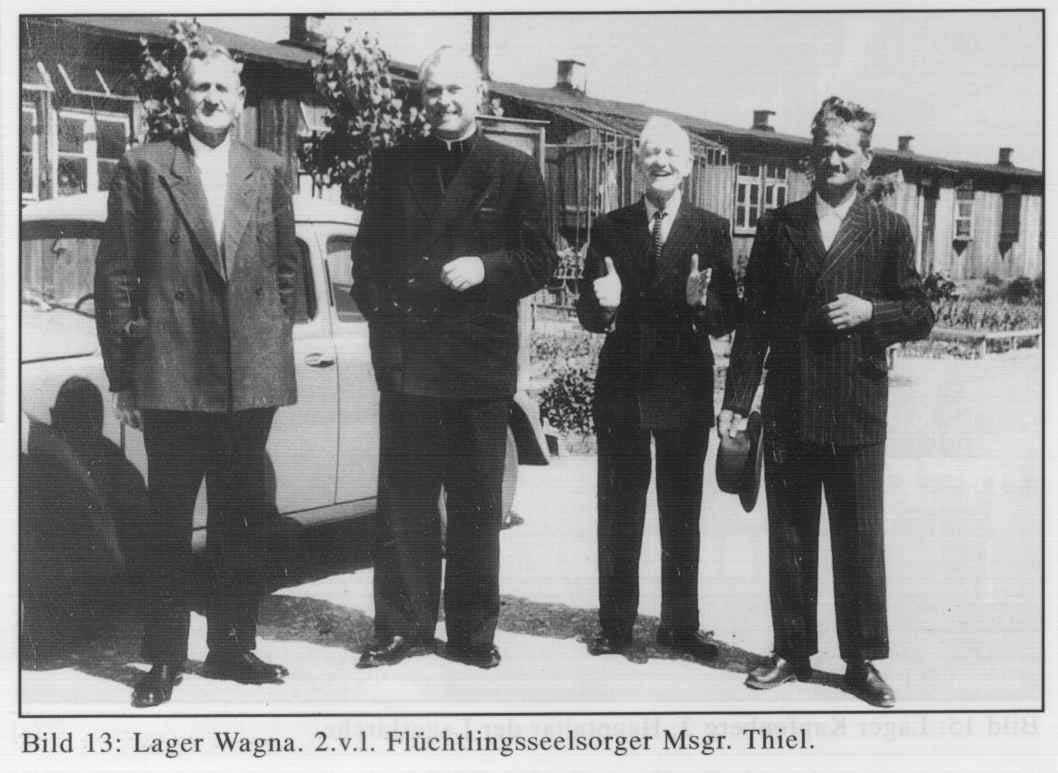
Photo 13: Lager Wagna. 2.v.1. Flüchtlingsseelsorger Msgr. Thiel.
Waiern - US zone;
Sun, Jul 19, 2020
For some years now I have been looking at your website and it has been really helpful to me. You have done a massive job.
I am writing to you as I have just completed a new website which has a lot of photos, reports and information on 5 Displaced Persons Camps, collected by my mother, Clare McMurray/Wositzky.
In 1948-51, my mother worked in several camps in Austria and Trieste and brought with her to Australia photographs, monthly reports, refugee art and handcraft.
I decided that it would be wonderful if this material was accessible to the people or their families who were in the camps at the time - hence I have just put it all on a website.
The camps mum worked in Austria were Eisenerz, Kapfenburg, Reid Rehabilitation Centre, and the YMCA Simmer Camp program in Waiern and Ebanesse.
She also worked in Trieste - in San Sabba, Opincina and Gesuiti. The website has a lot of material from all of these camps.
The link is www.displacedpersoncampcollection.org
Thanking you, Katherine Wositzky katherine.w@optusnet.com.au
Waldstein - British zone;
Wallnerkaserne - Salzburg US Zone Team 321, Jews, Farmach Stadtteil; See Salzburg archives.
Warenhaus - Dp camp in Graz, Ursulinen; British zone;
Warmbadallee - Villach; British zone;
Warmbader Allee - Villach; British zone;
Wartberg - British zone;
Wegscheid, Maurice L Tyle, camp 67- US zone; UNRRA team 337; 57 Hungarians,
Jews
http://www.wegscheid.de
Markt Wegscheid
Marktstr. 1
94110 Wegscheid
Telefon: +49 (0) 8592/ 888-0
Fax: +49 (0) 8592/ 888-40
E-Mail: info@wegscheid.de
.JPG)
FL Linz Wegscheid 1948
(Photo credit: Ecker)
Photo submitted Klaus Fohringer
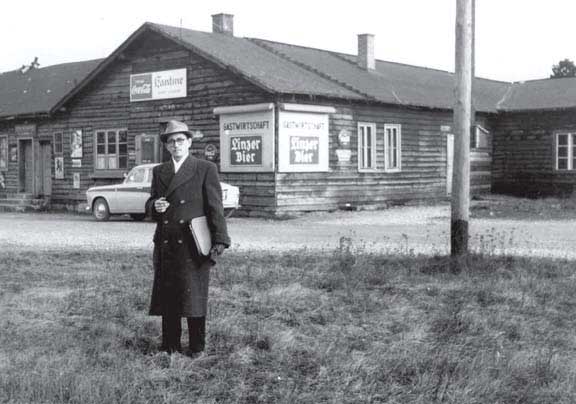
Wegscheid Cantine, Photo source: Virtual Museum of Austria http://www.ooegeschichte.at/
Wegscheid / Vogscheid Tyler
I Land Oberösterreich (Upper Austria); U.S. zone
See archives: Landesarchiv Linz.
Wegscheid reception centre, / Vogscheid / Land
Upper Austria, (U.S. zone) UNRRA: Team
337 Wegscheid farewell party
Land Oberösterreich, see
Landesarchiv Linz.
May 6, 2020
I am reaseaching on the DP Camp Freiberg in Flossenbürg als known as "Camp Sikorski" or just DP Camp Flossenbürg on the ground of the former concentration camp Flossenbürg. I would like to come into contact with people interested or connected to the DP camp in Flossenbürg. Before coming to Flossenbürg the 2.100 DPs stayed in camps in Austria, mainly in Braunau, Ebensee, Ems, Frankenmarkt, Ranshofen, Wegscheid and Wels-Lichtenegg. Therefore I am happy to share information with researches on this camps, too. Furthermore there was a Jewish DP-Community in Tirschenreuth. As I'd like to focus on the relationship between (mostly) Polish DPs in Flossenbürg und surrounding Jewish DPs, I'd like to get to know more about Tirschenreuth, too.
SarahGrandke@gmx.de
Weichselbaum Siedlung, Jews, US zone Team 318; Gaisbergstrasse/ E. Fugger-S ; UNRRA Team 318, Salzburg; US zone; Klein-Belgrad, Russians
Any assistance from anyone would be greatly appreciated. Thank You Luci Lebedew
Weisskirchen - Kärntnerstrasse; British zone;
Weissenstein - Villach; Carinthia state; British Zone;
Weidmannsdorf, Camp C, UN # 332 (British zone) see Klagenfurt
Below is picture of the Nazi POW Camp Weidmannsdorf,
which after the war became a DP Camp (source: Stalag18a Veterans)
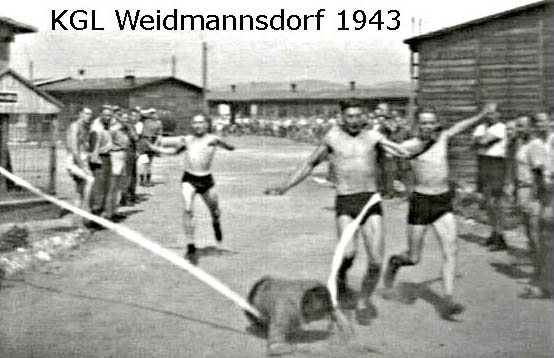
Photo submitted Klaus Fohringer
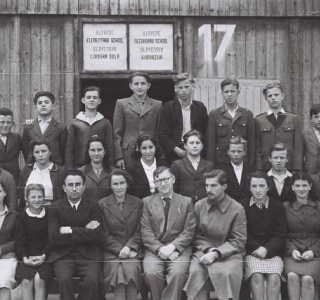
Nov. 19, 2014 Hello Madam
I have already contacted you for research concerning my dad some time ago, I found this photo. I am almost sure that the man with the small beard is my dad. Unfortunately I do not find this photo on the sites. Can you help me. She had to be taken to peggetz -lienz. This would correspond with the travel card on the latter. UNRRA AUSTRIAN OPERATION 331 TB: WEIDMANDORF CAMP TEA D. P. 6S LISTED REQUESTED TO BE SENT TO Klagenfurt where they intended to find work.PLEASE DEMIT THE ABOVE D.P.S. HAVE NOT BEEN REGREGISTERED IN THIS CAMP. (Computer translation from French below.)
GAU:KAERNTEN
KREIS:LIENZ
GEMEINDE:PEGGEZ
2 SEPT. 1946
My father was KONONOV IVAN made prisoner the May 10, 1943 in Dnipropetrovs'k do the September 16, 1926 I sought the camp of dp , and perhaps I can know as well the concentration camp where he spent his youth. Thank you Madam for everything that you do for the memory of our Ukrainian families still well forgotten in this war.
Bonjour Madame
je vous ai déjà contactée pour des recherches concernant mon papa.
il y a quelque temps, j'ai trouvé cette photo.
je suis presque sûre que l'homme avec la petite barbe est mon papa.
Malheureusement je ne retrouve pas cette photo sur les sites.
pouvez -vous m'aider.
Elle a dû être prise à peggetz -lienz. cela correspondrait avec la carte de déplacement de celui -ci.
UNRRA AUSTRIAN OPERATION 331
TO: WEIDMANDORF CAMP
THE D.P.6S LISTED REQUESTED TO BE SENT TO KLAGENFURT.
WHERE THEY INTED TO FIND WORK: PLEASE DEMIT
WITHOUT DP 2 THE ABOVE D.P.S. HAVE NOT BEEN REGREGISTERED IN THIS CAMP.
GAU:KAERNTEN
KREIS:LIENZ
GEMEINDE:PEGGEZ
2 SEPT. 1946
mon père était KONONOV IVAN fait prisonnier le 10 Mai 1943 à Dnipropetrovsk né le 16 septembre 1926
Je cherche le camp de dp , et je pourrais peut-être connaître ainsi le camp de concentration ou il a passé sa jeunesse.
Merci Madame pour tout ce que vous faites pour la mémoire de nos familles Ukrainienne encore bien oubliées dans cette guerre.
(I guess I lost the email address to this person. Please see below for reader's reply.)
Dec 11, 2014 Dear Olga,
I found a new posting (Nov. 19, 2014) by the DP camp Weidmannsdorf, a french letter with english translation. But there is no name of the writer, so I answered to you:
I know the foto, I have the complete film, the peacures of all classes that where photographed this day. This is a foto from Lienz, DP camp Peggetz. The barrack Nr. 17 was the school barrack.
The man with the bread (I mean the man in the front with the grey coat) is Ciril Vider. My mother wrote a list with all names of the teachers and pupils she knows. All the teachers and children are Slovenian.
By the way, the UNRRA-number of Lienz was 331 and the Number of Weidmannsdorf was 332. I hope you can give this information to the writer. I also can write the information in Slovenian.
Sincerly,
Johanna Kronawetter johanna.kronawetter@aon.at
http://www.nakul.biz
Wels (Oberösterreich
Upper Austria); near Linz, US zone; Team 320
City Archive: Stadtarchiv
A-4601 Wels
Rathaus
Tel. (07242) [0043 7242] 235
City of Wels:
Magistrat der Stadt Wels
4600 Wels, Stadtplatz 1
Telefon: 0043 (7242) 235-0
http://www.wels-stadt.at/
May 6, 2020
I am reaseaching on the DP Camp Freiberg in Flossenbürg als known as "Camp Sikorski" or just DP Camp Flossenbürg on the ground of the former concentration camp Flossenbürg. I would like to come into contact with people interested or connected to the DP camp in Flossenbürg. Before coming to Flossenbürg the 2.100 DPs stayed in camps in Austria, mainly in Braunau, Ebensee, Ems, Frankenmarkt, Ranshofen, Wegscheid and Wels-Lichtenegg. Therefore I am happy to share information with researches on this camps, too. Furthermore there was a Jewish DP-Community in Tirschenreuth. As I'd like to focus on the relationship between (mostly) Polish DPs in Flossenbürg und surrounding Jewish DPs, I'd like to get to know more about Tirschenreuth, too.
SarahGrandke@gmx.de
Weyern - Spielberg; British zone;
Wiesbauerstrasse - Nr. 9; District Maxglan; US zone;
Wien - Vienna on the Danube River; Haupstadt & Bundesland - 13 DP camps; 1. Bezirk Internationalisiert (gem. Verwal); (French and British zones)
Wien, III - Arsenal, Gem Wien, Schlachthausgasse Barracks camp; British zone;
Wien, V - Am Hundsturm;
Wien, IX - Rothschild Hospital; Severingasse; District Alsergrund; US team 350; Durchgangslager; in 600 Jews
Wien, IX - transit camp; Alserbachstrasse; District Alsergrun; US zone;
Wien, XI - Heidestrasse 2
Wien, XII - Wienerbergstrasse 14;
Wien, XIV - Bergmillerg. 2
Wien, X1V? - Hütteldorf;
Wien, XV - Siebeneicheng. 17
Wien, XVI -Kernstockpl. 1;
Wien, XVI - Speckbacherg 48
Wien, XVII - subcamp of Rothschild Hospital; Arzbergergasse Nr. 2; District Hernals ;
Wien, XVII - Neuwaldelgglerstrasse 38
Wien, XVII - Rupertusplatz, Dornbach, Districtl Hernals, former school,
Wien, XVIII - Rothschildspital
Wienerbergstrasse 14 - Wien, XII
Wienerstrasse - Kapfenberg; British zone;
Wiesenhof, in Absam municipality, in Innsbuck, (French zone),
Winklersiedlung - Kapfenberg; British zone;
Photos submitted by Klaus Fohringer
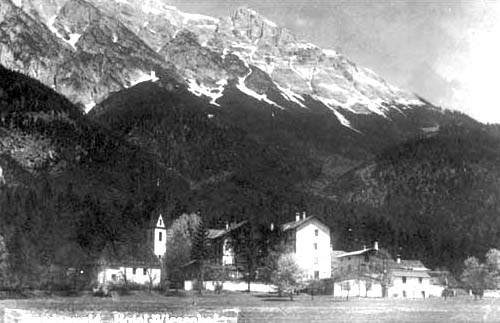
.JPG)
Wohnlager 212 - in Admont, British zone;
Wohnlager 217 - in Admont, British zone;
Wohnlager 241 - in Admont, British zone;
Wohnlager 243 - in Admont, British zone;
Wohnlager - Kammersberg/ Kapfenberg; St. Peter; British zone
Wolfsberg on the Lavant river, UNRRA barracks; team 329, former POW camp Stalag XVIIIA Hofendorf (?), British zone
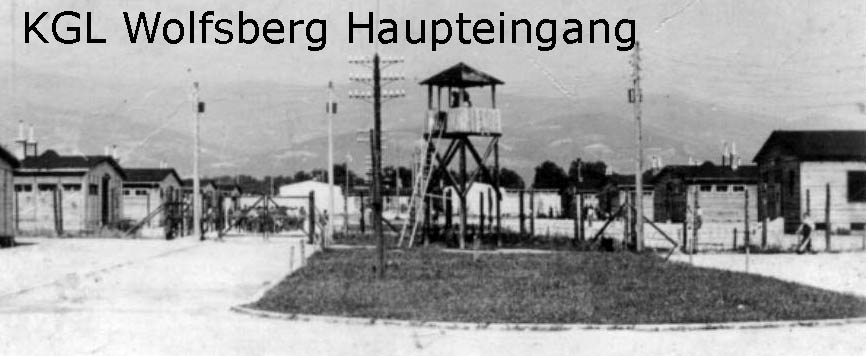
Here is picture of the Nazi POW Camps Wolfsberg,
which after the war became a DP Camp
by Klaus Fohringer
(source: Stalag18a Veterans )
Wolzing - Fischering; British zone;
Wörgl - Camps A, In Tyrol; French zone;
Wörgl - Camps B, In Tyrol; French zone;
Zeiselberg/ St. Thomas - Carinthia/Kårten state; castle, British Zone;
Zell Am See is near Saalfelden, Pinzgau province, Lake Zeller See, US
zone; See
Salzburg archives.
DP camp photos & map: http://www.crommelin.org
Municipal office: Stadtgemeinde
Zell am See
Brucker Bundesstrasse 2
A 5700 Zell am See
Tel: 0043 6542 766 -0
Fax: 0043 6542 766 -30
Email: office@gde.zellamsee.salzburg.at
Zellenfeldgasse - Leoben; British zone
Zeltweg - kaserne; Jews; Hangweg; Lindernwald; Scmiedgasse; British
zone;
Zeltweg is a town in Styria, Austria. It is located in the Aichfeld basin of the Mur River in Upper Styria. Larger municipalities in the vicinity are Judenburg, Knittelfeld and Fohnsdorf. Town info: http://www.zeltweg.at
Stadtgemeinde Zeltweg
Hauptplatz 8
A-8740 Zeltweg
Telefon: 03577-22521 0
Telefax: 03577-22521 17
stadtamt@zeltweg.at
Zentralfriedhof - Graz, British zone; 1940 f. Bukowina-Umsiedler (Lager IV)
Ziegeleibaracke - Lannach; British zone;
Ziegelsdorf - Carinthia/Kårten state; British Zone;
Zieri - Seefeld in Tirol
Lots more information on Austria page 7