Displaced Persons -

German DP camps Wa - Wi


Map, References / Sources found on intro.

Wadersloh, 4 camps (British zone) in the district of Warendorf, in North Rhine-Westphalia,

http://www.wadersloh.de/

Waderslohknoche (British zone)

Waiern, a small and beautiful village in Carinthia, See Feldkirchen - There is also A Waiern in Austria; Ukrainians

Waldliesborn (British zone)

http://www.bad-waldliesborn.com/

Walstedde (British zone) in Nordrhein-Westfalen

Waltrop, 2 camps (British zone); http://www.waltrop.de/ See archives in the city of Duelmen


Waltrop is a town in the district of Recklinghausen in North Rhine-Westfalen.

    City archive: Stadtarchiv Waltrop, Stadtverwaltung, Rathaus
    Münsterstr. 1
    45722 Waltrop
    Tel.: (02309) 930-0

    Mailing address :
    Stadtverwaltung Waltrop
    Postfach 120
    45722 Waltrop

    Contact:
    Tel.: (0 23 09) 93 0-0 (Vermittlung)
    Fax: (0 23 09) 93 0-3 00
    E-Mail: stadtverwaltung@waltrop.de

    Photos of slave labor camp in Waltrop (in German), 2000 Russians : http://www.lions-dorsten-hanse.de/html/body_zwangsarbeiter.html

    Waltrop-Holthausen

    Search in google Waltrop zwangsarbeit (forced labor) and translate German to English.


Wangen Russian boy scout troops http://www.wangen.de/

Warburg / Peckelsheim, #32/134, (British zone) Poles

    City archive: Stadtarchiv Warburg
    Sternstr. 35
    34414 Warburg
    Tel.: 05641-92562
    Fax: 05641-92582
    Web: http://www.archive.nrw.de/home.asp?stadta-warburg
Warendorf, 2 camps (British zone) Poles
    War central archives: Kreiszentralarchiv Warendorf
    Waldenburger Str. 2
    48231 Warendorf
    Tel.: 02581-53-2197
    Fax: 02581-53-2452
    Web: http://www.archive.nrw.de/home.asp?kreisza-warendorf

    http://www.hbz-nrw.de/produkte_dienstl/nwbib/nwbib15/node6126.html

Warner - Kaserne, IRO Area 7, Munich
    Olga Kaczmar is personally interested in this one.
    Knock and it shall be open. Seek and you shall find. Ask and it shall be given. I just received a large package of pictures of Warner-Kaserne and its inhabitants, and will be posting them on a Warner-Kaserne page in the near future. Stay tuned.
    Hi Olga
    We lived in Warner Kaserne, Munich from 1947 to 1951 before coming to the US.
    Tell me about your experiences there. I am writing a book to share with my kids and grandkids. Alex

24th infantry http://libraryautomation.com/24th/warnerkaserne.html

http://www.usarmygermany.com/USAREUR_City_Munich.htm


Watenstedt (British Zone) near Salzgitterer, West Germany,

    My parents both immigrated to the US from a DP camp in Wattenstedt, Germany in the late 1940's. Thanks a lot for the help. Michael Babycz
Watenstedt-Salzgitter
    Dear Olga,
    I'm overwhelmed by this incredible site of yours. I don't know why but recently I've developed a penchant to find out more about my history. And it seems that each passing day it's becoming more so.

    My mother, for survival purposes, she stated her nationality as Polish. During her stay in a dp camp (I have a document stamped Watenstedt-Salzgitter January 1950, this may have been an embarkation point) in 1945, she met a man she called Jozef Krawczyk (aged approx 40). After a short courtship, she fell pregnant with me. This man appeared to be a bit of a lad and soon after decided to head back to Poland from whence he came. My mother spent the latter part of her pregnancy being cared for by Jozef's son who was 17 or 18 at the time and carried the same name as his father. When I was born, Jozef junior also headed back to Poland to inform his father he had another son. Some six weeks later, mum met a Russian man, called Wasyl Semenikow, whom she married. In May 1950 we migrated to Australia.

    At this point, I would dearly love to find that older brother and any other relatives in Poland. I would be grateful for anything you may be able to do for me or at least point me to someone who can. Yours Greatfully, Eugene Semenikow/ Australia


    Submitted by: Alan Newark

    http://remember.org/educate/dingell.html

Warthegau - download Yad Vashem pdf: Warthegau & the Jews

    The Question of the Polish Forced Labourer during and in the Aftermath ofWorld War II: The Example of the Warthegau Forced Labourers
    by Jeanne Dingell, dingell@zedat.fu-berlin.de Copyright 1998, All Rights Reserved. Please contact the author if you have any questions.

    [Olga's note: These Poles were also Ukrainians]

    sThe question of the Polish forced labourers, who were used by German industry in the Second World War, is, in view of the political changes in Eastern Europe, an urgent challenge for historians and lawyers. While this question was not ignored by the Allies following the war, it became increasingly unimportant in the wrangle between the Super Powers for Germany and in the wake of the Cold War.

    In Post War Germany and in the West, the question of the compensation and rehabilitation of these "displaced persons" became less and less importan tas the threat in the East became more real. The successful integration ofthe Federal Republic of Germany into the West was of prime interest to the United States and its Allied Partners in the early Fifties. Konrad Adenauer, in his capacity as Prime Minister and Foreign Minister of the Federal Republic of Germany, was able to persuade the Western Allies and Germany's creditors responsible for the Federal Republic's reparations-debts at the Paris Conference on the German War Debt of l951 that Germany's compensation and reparation commitments must be held to a minimum.

    In order to prevent a repetition of the German reparations-disaster of theTwenties and Thirties, and to ensure the successful integration of the Federal Republic into the West, certain restraining measures had to be taken in order to secure the financial stability of the emerging new country. Certain groups of Nazi-victims were to be excluded from direct compensation through the German Government. At best, these victims could hope for some sort of compensation through the German reparations payments to their home country. In the case of the Poles, this was to take place through the Germans reparations to the Soviet Union, as agreed upon at the Potsdam Agreements of l945.

    Neither the Polish (non-jewish as well as Jewish) forced labourers of World War II, nor any of the other numerous victims of Nazi War Crimes in Poland received any sort of adequate compensation through these reparations agreements.
    There are a number of reasons for this, not the least of which is that Poland never received any sort of reparation payments as such: The Soviet Union arranged to share their part of the German reparation payments with Poland through a complicated system of trade and exchange payments. The truth of the matter is that the Polish Nation never received any concrete reparations payments and that individual victims of Nazi terror never received any sort of real compensation for the injustice that was done to them. The only exceptionto this rule is the case of the Polish victims of Dr. Mengele's pseudo-medical experiments. This group of victims is entitled through separate agreements to a pension through the German Government.

    The question of Polish forced labourers in World War II is a question which continues to nag at the German conscience and will probably remain the basis for a hopeless fight for justice on the part of these victims ofNazi-terror who still live.

    The group of Polish forced labourers with which I am familiar with come from the "Gau Wartheland", one of four administrative districts which the Nazis cut out of the part of Western Poland which they annected in l939.The "Warthegau", as many Nazis referred to this district, was a Nazi creation with little or no bearing on the historical realities of the region. It was to become an experimental laboratory, where the economic, cultural and social supremacy of the German people would inevitably lead to the extermination of all other indigenous peoples in the region (most Poles and all Jews).

    In a complicated system of burocratically determined ethniticity,Volksdeutsche (Germans by descent, but not by citizenship) were to be segregated from the rest of the population. Jews were to be crowded into local and then consolidated regional gettos. Following the Wannsee Conference (January 20, l942), the Nazis planned the industrial murder of these and all other European Jews en masse. The Poles were to be used as an inexhaustible source of slave labour for the colonisation of this and other regions of Poland and were then to be eventually exterminated. Germans from all parts of Eastern and Western Europe were to be brought into take their place in the biggest colonisation project ever planned inEurope.

    In the case of the "Warthegau", the governor in charge (Artur Greiser) was faced with an extreme dilemma as to what to do with the Polish population. On the one hand, it was not only official Nazi dogma that this "Warthegau" was to become "German", but his own personal goal that this district was to become ethnically "German", and, if possible, in the course of the war. On the other hand, the Poles were a necessary part of the daily workforce. They were necessary in the normal civilian production and they were a necessary element in the Nazi colonisation projects throughout the"Warthegau". (This included many different kinds of infrastructure improvement projects: pavement and building of roads, construction of administrative buildings, park planning and improvement, water works and canalisation, rerouting of rivers, etc.) In addition, there was an increasing tendency throughout the war for the German industrialists to set up armaments factories in this and other "annected" parts of Europe. It was thought, and to some extent rightly so, that the Allies would be less likely to bomb factories in this region. Poles were a necessary part of this war production work force, especially after the advent of the Eastern Front in the Summer of l94l and the German Declaration of War against the United States on the llth of December l941.

    As I have already mentioned, Governor Greiser was faced throughout the course of World War II with an essential dilemma: On the one hand he wanted to rid his district of unwanted Poles, in order to realise his goalof a purely "German Warthegau". On the other hand he needed these people in order to keep the economy on its feet. He, the bureaucrats under him and the local firms who needed these Polish workers, were even forced l942-43 to compete with firms in the "Altreich" (Germany in its borders from l937) for these workers.

    While more than 360,000 Poles from this "Warthegau" were deported to other parts of Germany to do forced labour, many more Poles were made to do forced labour in their home country during World War II. How many is a question of definition: Who is a forced labourer in a war situation? Are all native workers in an occupied country "forced labourers"? Or are only those who are deported "forced labourers"? How does one define this concept? And how can one define this concept and still do justice to the victims of these horrendous crimes to humanity without overreaching the bounds of common sense? A reasonable educated guess is that somewhere around 1 to l 1/2 million Poles in this "Warthegau", above and beyond those who were deported, were engaged in some sort of forced labour inthe course of the war. (The pre-war population in the region that became the "Warthegau" was around 4 Million.)

    In the Nurnberger Trials against the 25 chief Nazi War Criminals , the prosecution emphasized that the deportation and use of "Fremdarbeiter" (foreign workers) in the "Reichskriegeinsatz" (Nazi Work Programm) was a violation of International Law, in particular of the Hague Agreements concerning Land Warfare from l907. While the prosecution, in their case against the defendants' crimes against humanity, never tried to spare the Nazi War Criminals of their responsibility for the deportation and slavery of foreign workers, they were forced in the absence of a better legal basis to base their case on the said Agreements from the Hague. Articles 46 and 52 of the fourth Hague Agreements gave them the chance to presen tthe "Reichskriegseinsatz" as an infringement of the occupying army against the rights of the domestic population. The prosecution interpreted the Agreements from the Hague as following: The occupying army, in this case the Wehrmacht, had a right to require civilians in the occupied lands (but only against proper payment for services provided) to provide provisions for the occupying troops. Under no circumstances were German authorities entitled to deport civilians to the Altreich‚ (Germany in it's borders from l937) and require them to work in order to help the war effort on theGerman home front and against their native countries.

    The real situation in which these ex-forced labourers found themselves was, however, not rendered in the interpretation and representation of the prosecution. While the hierarchy of the "Fremdvolkischen" (foreignpeoples) and the living conditions of the imprisoned workers - plenty of photos were presented the court as evidence - were aptly described, the charges which were made in Nurnberg don't come close to doing justice to the plight of these victims of Nazi treachery. These people, the"P-Arbeiter" (Polish Workers) and the Russian "Ostarbeiter" (Easternworkers) were, despite the fact that they were legal alien workers in the German Reich, paid taxes, social security, health insurance dues and other disriminatory "Sonderabgaben" (special taxes for racially discriminatedpeoples in the Third Reich), under no circumstances normal workers, butrather inhumanly treated slaves. They were given the chance to live through doing work for the Third Reich. They received daily rations of on the average 600-800 Kcal. The fare was representative for concentrationcamps in the Third Reich: substitute coffee once daily, a watery soup with little or no meat, 750 Grams of black bread every three days. And the German authorities and industrialists responsible for this tragedy expected their slaves to work 6-7 days a week, l0-l2 hours daily.

    Depending on the size of the German firm which employed these inmates of the German industry, their treatment varied. In general, though, the larger the firm, the worse the treatment. The "Arado" - Flugzeugwerke GmbH Out-Placement Works in Rathenow on the Havel river near Berlin, for example, were nothing less than a concentration camp. The some l0,000 workers in this armament factory had to deal with not only hunger, overwork and the loss of any sort of private sphere, but also with the spectrum of typical concentration camp diseases: typhoid fever, tuberculosis and diphtheria. The greater the level of rationalisation, the more important it was for the workers to stay "healthy" and remain at their work place. Sickness and failure to work meant a break in the chain of production for the employing firm. For forced workers this meant risking being replaced, handed over to the SS and at worse being exterminated.

    Following the war, the chance of these forced labourers from the East receiving a just compensation were not good. In particular, the events and decisions surrounding the "German Question" made it difficult to speculate as to whether there would ever again be the necessary geopolitical conditions necessary to approach the question of the compensation of the forced labourers:

    Even before the unconditional surrender of the German Wehrmacht on the 8./9. May l945 in Karlshorst near Berlin, Stalin had made his claims to Eastern Europe clear: The Soviet war booty was to be not only the sovereignty over all lands east of the border set by the secret protocol to the Hitler-Stalin Pact (August 23, l939) regarding the borders of theThird Reich and the Soviet Union, but also the betrayal of Poland and the rest of the lands east of of the Soviet Zone of Occupation in Germany. The negotiations of the "Big Three" in Yalta (February 4-ll, 1945) and in Potsdam (July l7- August 2, l945) were the realisation of Stalin's goals:The recognition of the Curzon Line as the eastern border of Poland, aswell as the division of Germany in Zones of Occupation were set down in the "Declaration of Freed Europe".

    Shrewd observers of the time knew precisely how to interpret thes historical events: The Division of Germany could only mean the Division of Europe. Millions of people were to be left to their fate under the Stalinists. The basis of an economic and political dictatorship was created beyond the West German border. Out of the ashes of the Second World War arose two Super Powers: One of which, the Soviet Union, was to take the lead of the socialist dictatorships. The western occupation Zones of Germany and Austria were to return to the cradle of Capitalism. Their leaders were to be formed through "Reeducation", Lucky Strikes, U.S.Dollars, open markets and American troups.

    The forced labourers about whom this paper is about, returned to life in this divided world. Physically at ends, most of them without any sort of contact to their immediate families, in a foreign land and at the mercy of relief organisations, wanted for the most part only to go home. This home was, unfortunately, only a thing of the past and for many of them would only be a reality in their ever lasting homesickness. Many of them were still children, when the Nazis deported them to the "Altreich". After their liberation from the work camps, they were looked after appropriately for the first time in the Allied camps which were set up for them after the war. The official Allied policy in regards to these physically and psychologically damaged victims of Nazi terror, was that they were to be treated for the worst of the abuse to their persons and then be sent" home". These displaced persons were expected to take up with their liveswhere they left off.

    Many of them returned to their previous homeland. Many returned on foot, others with special trains and still others were at the time of their liberation already at home, as they were enslaved in their home country. Many of these displaced persons, however, were more than aware of the political and economic changes that were taking place in Eastern and Central Europe after the signing of the Potsdam Agreements from August 2, 1945 and used their "displacement" as an opportunity to emigrate. In particular the generation of Poles and other Central Europeans, who received their socialisation before the war, were more than aware of the danger in returning to their home country.

    Decision-makers and the press in pre-war Poland were more than aware of the hegemonial threat that the Soviet Union for Poland represented: For this reason, the Pilsudski-Government signed a non-agression Treaty with Nazi-Germany l934. This treaty, otherwise so inappropriate in the pre-war policies of Poland, expressed the great fear which the generation of Post-Versailles Poland had of Soviet-Russia and their French alliance.

    Many of the ex-forced labourers decided to stay in Germany. Some 60,000 of them remained in post-war Germany. In addition, many of these displaced persons emigrated from Europe after their liberation. The U.S.Government, for example, well aware of the political changes which were taking place in Europe, kept the immediate post-war policy regarding quotas of immigrants from Eastern Europe at their pre-war level, even ift his wasn't representative among the different immigrating nations in the US quota system. The limit for Eastern Europe was set at 20,000 immigrants per year from the respective leading emigration countries. Nonetheless, this solution was a difficult one, as the demand to immigrate was much greater than the number spaces available. In particular, family members, who were of age, were not automatically guaranteed the right to a ccompany these immigrants.

    The efforts of the many Eastern and Central European exile organisationsin the U.S. and other immigration-countries could only ease the difficulties these people had in integrating themselves in their new society: During the war, they were forced to leave their homeland and go to work for a totalitarian regime. After their liberation, they were often incapable of finding themselves the right nitch in their new country. The obvious difficulties that most of them had with learning a new language was certainly nothing compared to the isolation which many oft hem must have felt in their immigration experience. Who can really say, what sort of psychological barriers these people had to cross, in order to deal with a new language and culture? What must have gone through thei rheads, the first time they saw an American city or town? How difficult was it for them to get their papers and lives in order?

    Their immediate goals were certainly no different than those of other post-war consumers: a regular income, an apartment or a house, a car, the first television... For many of these ex-forced labourers, the work they did for the Nazis was the only qualification they had to find a job. Even after the war, they were to be reminded of this dreadful war experience.

    Many of these ex-forced labourers have since died. Often, the cause of their deaths is directly related to their work experience under the Third Reich. This is, of course, not always as easy to prove as to suppose. And even if the damage to their person is determined and documented duringtheir lifetime, they are not entitled to any sort of compensation orindemnification by German law:

    These non-Jewish displaced persons, who were forced labourers under theThird Reich are categorised by the German Authorities in the CompensationAgency (now the Referat V B of the Finance Ministry) as national or atbest political, and not as racially disriminated war victims. Inaddition, since they are foreigners who live outside of the German"Kulturkreis" ("cultural circle"), they are not entitled to a compensationor indemnification under German national law, but are rather expected toturn to their native countries, who have theoretically received reparationpayments following the war. In the case of Poland, this is especiallyquestionable, as Poland was theoretically granted reparations through theSoviet Union in the Potsdamer Agreements. For practical purposes,however, Poland received only goods and services from the Soviet Union,and at prices based on hard currency and not at the usual East Bloc"Transfer Ruble" prices.

    An exception was made following the war for "NationalgeschÉdigte"("damaged nationals"), who couldn't return home after the war: Therequirement for this sort of indemnification, was that the person inquestion was a political refugee as defined in the Geneva Convention fromJuly 28, l95l. These persons had to have been war victims, who wereunable to return home on political grounds or because of the changingpolitical situation in Eastern Europe. This category of war victim wasto be indemnified by the German Government directly, because they couldnot otherwise request help from their native countries.

    Many of the displaced persons, who would have otherwise qualified as political refugees as defined by the Geneva Convention from l951, had, however, in l953, at which point in time the "BundesentschÉdigungsgesetz"(BEG: the German "Federal Compensation Law") became effective, long since emigrated and taken on new citizenships. These ex-displaced persons were no longer refugees, but rather had established new lives in new countries.

    The rest of the "NationalgeschÉdigte", as I have already mentioned, were to be compensated or indemnified through their home countries. German reparations were to be the basis of this compensation. The one exception to this policy, was, as I have already mentioned, Polish non-Jewish victims of pseudo-medical experiments, of the sort which Mengele did. They were compensated 1972, following Willy Brandt's visit to Poland, through a special fund set up by the German Government as official successor-state of the German Reich.

    Some -- mostly Jewish or German -- ex-forced labourers received a minimal one-time "Hilfe" ("help") payment from the firm, for which they had worked. In order to receive such an indemnification, they were required to waive all further claims for compensation from the firm in question and from the Federal Republic as the official successor-state of the GermanReich. For the most part, the ex-forced labourers who came in question, were concentration camp inmates in Auschwitz, who had not even received a token wage for their slave labour. As German Citizens, this was a violation of their civil rights. For the successor firms of IG Farben (among others: Hoechst, Agfa, BASF, Bayer Leverkusen and Dynamit Nobel), it was important to clear the way for their participation in there armament of Germany in the framework of the NATO and the western integration of Germany. The IG Farben Auschwitz-works were undeniable. And following the case of Norbert Wollheim vs. the successor firms of IGFarben, they were forced to settle out of court for the some 4,000 victims who came in question.

    The rest of the ex-forced labourers, some 10-12 million victims of Nazi terror, were, as I have already mentioned, expected to be compensated in the framework of reparation payments, which were agreed upon in Potsdam and above all in the London Creditor Agreements of l951. The successor states of the German Reich, the Federal Republic of Germany and Austria, negotiated concrete reparation and compensation sums with the western allies and their creditors, which they agreed to pay under specific conditions. The Londoner Agreements, were, in particular, a framework which the Federal Republic used to keep the "Wiedergutmachung" (war reparations, compensation, and indemnification payments) costs down.

    In the wake of the London Agreements, the People's Republic of Poland announced in 1953 it's waiver of further claims of reparations from the succesor states of the German Reich. This was in accordance with the Soviet Union and the other East Bloc countries, and was a move designed to protect the German Democratic Republic from being forced to fufill furtherreparations claims. (Up until then, reparations had been paid in kind through demontage.)

    All Polish governments, including the socialist governments during theperiod of the "Polska Rzeczpospolita Ludowa", have never put the separateclaims of the individual ex-forced labourers in question! The PolishGovernment recognises the rights of the ex-forced labourers toindemnification for the work done with minimal or no pay, for pensionswhich are now due, as well as the compensation due these victims for thedeportation and abuse done to them by their persecutors.

    The Federal Republic and the German firms in question have in the post-warperiod consistently refused to acknowledge these rights of the ex-forcedlabourers and use the Londoner Agreements and the BEG, which is based onthe terms of these agreements to justify their refusal. Should one of the many ex-forced labourers, who have taken this matter to a German court, win, it would mean a precedence for further such cases...an avalanche of such cases would have to be expected, and this at a time when the Federal Republic is beginning to drown in the unexpected costs of the Reunification. Even if only half or one quarter of the 10-12 million ex-forced labourers still live, it would be very difficult for the Federa lRepublic to satisfy all the claims that could be made.

    Following the "Quiet Revolution" in Poland and thereafter in all other Eastern Bloc countries, the Polish and German Governments signed two friendship treaties in l991 and held talks which were the basis of the border agreements (preceeding the German Reunification) from 1991. It was agreed among other things, that the German Government would finance a foundation with 500 million DM paid over a 3 year period in 3 payments, which would "help" the Polish victims of Nazi terror who were still living. The foundation was not supposed to "compensate" these victims, but rather to "linder" the misery these people had to live with. For the most part these people receive a one-time payment of between 5 - 12 million Zloty (approximately $300-500). (This means that an average Polish ex-forced labourer - and only those still living in Poland -is entitled to a one-time "help"-payment of around $700 for up to 5 1/2 years slave labour! ) The word "compensation" has been intentionally avoided in order to prevent any sort of future legal obligation to Nazi victims of this sort. These "help" payments are the result of a political compromise between the Polish and German Governments and should in no way,shape or form be interpreted as a sort of "compensation".
    In the last few years the criticism of this "help" funds has taken a shar pturn: Following an investment scandal on the part of the funds-management, the German Government and the German press has put, with good reason, the management capability of the Polish board of directors into question: The Warsaw District Attorney`s Office is presently investigating charges of bad management practices and possibly assisted orat tempted embezzelment on the part of Bronislaw Wilk, Director of the Fundacja Polsko-Niemieckie Pojednanie. Wilk deposited about $ 2,5 Million of the funds monies into an account with a small private bank (not guaranteed by the State) in Warsaw, the Bank for Energy-Development and Environmental Conservation, Megabank SA. A party friend of Wilk's, Eugeniusz S., apparantly forged Wilk's signature to use the Funds monies in the Mega Bank account to guarantee loans to five different blind firms, all of which belonged to Eugeniusz S. The firms and the bank which loaned the money went bankrupt. The $2.5 Million disappeared. Eugeniusz S.,the directors of the bank and one of their employees are now being detained pending trial. And the district attorney's office is also looking into Wilk's questionable investmentment practices.

    The German Government and the German press has been following the course of this drama with great interest. The accusations of fraud and incompetence which are making the rounds in Warsaw diminish the really important questions regarding this fonds: Why was so little money paid into the fonds in the first place? (500 million en DM divided by approximately 600,000 estimated victims entitled to this "help"‚ leaves anaverage "help" of less than 1,000 DM or $600 per victim. And there are many more victims who do not qualify under the present very rigid stipulations.) The real questions that need to be asked as to the size of the "help" per victim are lost in the debate about the management of the fonds. 500 million deutsche mark is about 250 million dollars. The Americansgave the Poles $600 Million following the transition to democracy. The Germans have spent 1,000 billion German Marks on bettering the infrastructure in East Germany and wiping away all signs of communism in East Germany.

    The interest group which represents these forced labourers, StowarzyszeniePoszkodowanych przez III Rzeszy, have a suit going against the Federal Republic of Germany in its capacity as successor state of the German Reichat the International Court of Justice in the Haag. Their goal is to try to force the German Government to pay them a pension for the time that they paid into the German social insurance funds. They believe that even if the firms and the German Government refuse to pay them the salary which was kept from them for their forced labour, that they should at least receive a pension, as is the right of every German who worked and paid social insurance dues during the Third Reich, for the time they paid into the social insurance funds.

    The question of Polish forced workers will probably remain an unansweredand very difficult one in the relations between the German and Polishpeoples. Even after the last Polish victim of Nazi forced labour ceasesto draw his or her last breath, this question will remain one of a number of open sores in the relations between these two peoples.

    Submitted by Alan Newark braveheart562002@yahoo.com
    ------------------------------------------------------------------------


    At the beginning of 1945, Soviet forces drove the retreating Germans through the Polish lands. Caught in severe winter temperatures, most resident German citizens fled, many too late due to restrictions by their own government. An estimated 50,000 of the former German residents perished, some from flight conditions, some from the atrocities committed by conquering Soviet soldiers. The remaining German population was expelled to Germany.[5]

Wedel is a town in the district of Pinneberg, in Schleswig-Holstein, Germany.

It is situated on the right bank of the Elbe, approximately 20 kilometres (12 miles) south of Elmshorn, and 17 kilometres (11 miles) west of Hamburg. Second World War almost put the small city into ashes and debris. 70 % of the living spaces in Wedel were turned into rubble.

The city built large barrack settlements in a hurry. The housing shortage reached its high point when after WW II refugees came in masses from the east to Wedel. A census in 1947 shows that Wedel had 7,902 native inhabitants and more than 6,500 evacuated and refugees. Each person was allowed 4.9m² (52 square feet) of living space

City web site: http://www.wedel.de/

City hall:
Rathausplatz 3-5
22880 Wedel
Tel. 04103 707-0
info@stadt.wedel.de

City archive: Stadtarchiv Pinneberg
Bismarckstrasse 8
25421 Pinneberg
Tel: 0 41 01 - 21 12 24
Fax: 0 41 01 - 21 14 44
http://www.archive.schleswig-holstein.de/kreis_pinn/sapinnebe.html

Latvians, Balts.

1/30/08
What a wonderful site! I am a Latvian, Edgar Zarins jr, who lives in Westland, Mi. I discovered your site while searching for DP camp information in Diepholz, Germany. I am the official representative in North America for www.dpalbums.lv
I discovered that you have no information on my first camp Wedel near Hamburg.
Edgar Zarins Jr ezed24@wowway.com
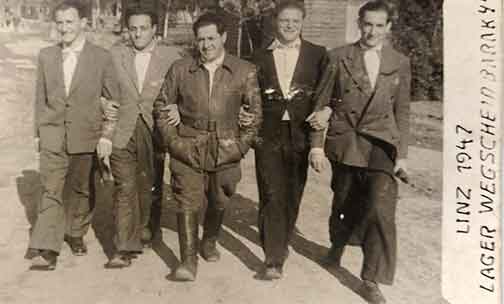
Wegscheid
    Situated near Linz, the Wegscheid camp issued money in denominations of 1, 5, 10 and 20. All notes depict the Star of David. From Displaced Persons Camp Money by Frank Passsic and Steven A. Feller.
Wehnen has its own page; Lithuanians,
    2/23/05
    I think my parents resided at a DP Camp in Wehnen but I do not see any information for that location on your web-site. They were immigrants from Lithuania. Al Grunas

    There's a big hospital in Wehnen, search on the web: Landeskrankenhaus Wehnen

Weiden, Latvian
    I don't know which is the newer address:
    City archives: Schulgasse 3a
    92637 Weiden / Oberpfalz

    City archives: Kulturzentrum Hans Bauer
    Schulgasse 3a
    D-92637 Weiden (Oberpfalz)
    Tel: +49 (961) 470 3900
    Fax: +49 (961) 470 3909
    E-mail: archiv@weiden-oberpfalz.de

    I am a Latvian DP that remembers being in Weiden and Schwbisch-Gmund. Thank You Andy Kruklitis

    3/31/05 I stumbled upon your site and was unable to find the DP camp I was born in. The village is Weiden, Bavaria. Can you give me some information on how to find out about this camp, please? Vera Akers

    2/15/2007 Mrs. Kaczmar,
    According to a UNRRA document I have on Konstanty Proniewicz, my father lived here from 1944 to late 1946 at Camp Hammerweg. He had been under the care of a Mrs. Proniewicz [first name was not given], with whom he had been evacuated from Iwacewicze, Poland [probably now Ivatsevichy, Belarus], along with her two children, whose names I do not have. Any information on this location, including on Polish or Belarussian refugees that were sent there from the region around Ivatsevichy, would be greatly appreciated. Max Monclair, Omaha, NE http://maxmonclair.blogspot.com

Weissenburg (I'm not sure this was a DP camp but it was a labor camp.)

US zone Weissenburg has a beautiful quaint, old town section you'll want to visit if you have a connection with this town.

Prison: Amtsgerichtsgefaengnis

    City archives: Stadtarchiv Weissenburg in Bayern
    Marktplatz 19
    91781 Weissenburg in Bayern
    Tel.: (09141) 907-221
    Fax: (09141) 907-227
    Email: Stadt@Weissenburg.de
    Web: http://www.weissenburg.de

Wentorf, has its own camp page
    #1231, Schleswig Holstein (British zone), Poles, Balts, Jews, Yugoslavs

    State archives in Hamburg: http://fhh.hamburg.de/stadt/Aktuell/behoerden/staatsarchiv

      Staatsarchiv Hamburg Kattunbleiche 19
      22041 Hamburg

Tel.: (040) 42831 - 3200
Fax: (040) 42831 - 3201
email contact form:
http://fhh.hamburg.de/stadt/Aktuell/behoerden/staatsarchiv/kontakt/kontaktformular/poststelle_40staatsarchiv.hamburg.de.html


Werdohl - Ukrainian, Hollander, Polish, Italian, Russian, Belgium and French laborers

9/12/2010 Dear Olga,

I don't know if you would like to add this list to your extensive list of forced labor camps, but I have recently received this list of VDM* camps that were operating in Werdohl (Eveking) after making an inquiry about my mother.

*VDM stands for Vereinnigte Deutsche Metallwerke

This list is courtesy of Gabriele Aschöwer Lager_Werdohl_German.pdf
Kreisarchivamtfrau
Märkischer Kreis

Fachdienst Kultur
Kreisarchiv und Landeskundliche Bibliothek
Bismarckstr. 15
58762 Altena
Tel.: 02352/966-7051
eMail: g.aschoewer@maerkischer-kreis.de

 
I hope you and others will find this useful. Sharon Miklas laffinbuda@gmail.comlaffinbuda@gmail.com


Werl (British zone) Poles

    City archives: Stadtarchiv Werl
    Hedwig-Dransfeld-Str.21-23
    59457 Werl
    Tel.: 02922-800-1018
    Fax: 02922-800-1098
    Web: http://www.archive.nrw.de/home.asp?stadta-werl
Werther (Bielefeld), #3163, Land Niedersachsen (British Zone), Poles, Westerbrook Dutch Jews
    the Canadian liberation team who died there

    City archives: Stadtarchiv Werther
    Mühlenstr. 2
    33824 Werther
    Tel.: 05203-70517
    Fax: 05203-70588
    Web: http://www.archive.nrw.de/home.asp?stadta-werther

Wermelskirchen Hospital (British), Poles
    City archives: Telegrafenstr. 29/33
    42929 Wermelskirchen
    Tel: (02196) 710-0
    Email: post@stadt.wermelskirchen.de

Werne (5 camps-British)

    City archives: Bahnhofstr. 8
    59368 Werne
    Tel: (02389) 7153
    Fax: (02389) 71538
    Email: S.Maetzke@Werne.de

Werther, Land North Rhine / Westphalia (British)

    City archives: Stadtarchiv Werther
    Mühlenstr. 2
    33824 Werther
    Tel: 05203-70517
    Fax: 05203-70588
    Web: http://www.archive.nrw.de/home.asp?stadta-werther
Westfalen is a region
    Landeskirchliches Archiv der Evangelischen Kirche von Westfalen (Archives of Evangelist Protestant Church of Westfalen)
    Altstädter Kirchplatz 5
    (Post office box) Postfach 10 10 51
    D-33602 Bielefeld

    The street address is Ritterstrasse 19.

    Tel: 0521 594-296
    Fax: 0521 594-129
    E-mail: archiv@lka.ekvw.de

    map and region information in English http://search.yahoo.com/search?p=westfalen+1945+zwangsarbeiter&vm=i&n=20&fl=0&x=wrt

    My husband's family were in camp in Alfeld and Westfalen. Can you help with information in english please. I really find your sight informative. Thanks Linda Juda Australia

    Documents in German concerning forced labor in Westfalen http://search.yahoo.com/search?p=westfalen+1945+zwangsarbeiter&vm=i&n=20&fl=0&x=wrt

Wetzlar has its own web page; near Frankfurt am Main
    United Nations Relief and Rehabilitation Administration Archives
    Record Group: PAG 4 Box 4: District 2: Wetzlar, Zeilsheim

    Historical archives: Mauser Gasse 17
    35578 Wetzlar
    Tel.: (06441) 99351
    Fax: (06441) 99433
    Bibliothekssigel: Zta 1488
    Kontakt: Dr. Irene Jung, Historisches

    City archives: Stadtarchiv Wetzlar
    Address: Rathaus,
    Hauser Gasse 17,
    D-35578 Wetzlar

    12/9/04 Dear Olga,
    Can you advice me where to find records about my parents? They stayed in American Army refugee camps after sec. world war. I know for sure they were in Wetzlar (near Frankfurt am main) on Sept / Oct 1948. I'm looking for their marriage certificate or any other document about them like a copy of their passports or their identity cards. They came after the Holocaust to Germany from Poland and Russia. Their names are: Avram Ledershtein & Mania Ledershtein (Finkelshtein). Anaish

_____________

14, May 2009, Dear Olga,

    We have contact few years ago about Maczkow dps polish city in Germany.

    I have also pictures about UNRRA team in Wetzlar in Germany if it can help someone who search’s info’s about it. I make already a blog about polish troops and the great father, and I’ll make one In a few days or week about UNRRA teams. http://zygmunt-sawicki.blog4ever.com/blog/index-135626.html

    Regards and thanks

    G.Lapers gilles.lapers@skynet.be


Wewelsburg (British); Poles

Wiedenbrück / Wiedenbrueck

Wiesbaden

    City archives: Stadtarchiv Wiesbaden
    Im Rad 20
    65197 Wiesbaden
    Germany
    Tel: 49-611-313329
    Fax: 49-611-313977
    Email: Wiesbaden.stadtarchiv@main-rheiner.de

    State archives: Hessisches Hauptstaatsarchiv
    Mosbacher Str. 55
    65187 Wiesbaden
    Germany
    Tel: 49-611-8810
    Fax: 49-611-881145
    Email: Poststelle@hhstaw.hessen.de
    Web: http://www.hauptstaatsarchiv.hessen.de/

    Submitted by: Wolfgang Strobel, author of Post der befreiten Zwangsarbeiter - Displaced Persons Mail Paid in Deutschland 1945 - 1949.

    ------------

    Dear Olga
    I was delighted to find the site dp camps and I have looked through with great interest. Both my Lithuanian parents were in dp camps. My mother was in Luebeck and she says she saw my father in Scwerin dp camp after the war. His friend says in was with him in Wiesbaden dp camp and the he played national league basketball there. My father was taken to Germany and he did forced labour for the Luftwaffe. Do you know if they would have records of forced labourers? I would appreciate any help that you could give me. Thanks Birute Davies

    ------------

    12/28/04 Dear Olga,
    Great site. I'm looking for a missing person, Vanda-Ofelija Saukaite (maiden name), Lithuanian. Last seen in Wiesbaden DP Camp in 1949. Any help would be greatly appreaciated. Thank You. My E-mail: www.mitchtaras@yahoo.com MITCH TARAS


------------

11/17/07 DEAR OLGA KACZMAR

I am requesting help in finding Wladyslawa Dumanskiego (Dumanski, Dumansky), born 3 November 1923 in the Poland in Greagarious in the former Tarnopol (Ternopil) province, commune Bialy Kamien (present-day Ukraine). He is the son Antoniego and Stanislawy from the Kisinska house.

At 19 years old, he was taken to the Germany for the compulsory work (slave labor). He spent 6 years (1942-1948) in Germany. He spent in camps: DIEBACH (1942-1945, the employee of FARMS), WILDFLECEKEN (1945-1946), WIESBADEN DOTZHEIM (1946-1948, for employer LSCO). He also worked in Germany for a women who might have been called Theresa Mueller. The German also spent time in the American zone in 1945.

Wladslaw DumanskiHe wrote in the application for help to International Refugee Organization (IRO) so the date of the control of displacement of this 30.03.1950, was in 1959 IRO Center Control in Hanau). He wanted to immigrate to the England because of political reasons, so he could leave England to go to Australia. He could emigrate from the Germany thanks to the organization International Refugee Organization in years 1948-1959. The IRO application for help in leaving zostalo (undersigned by Wladyslaw Dumanskiego) in the year 11.06.1948. There is the most probably marriage recorded for Wladyslaw Dumanski at the Australian office of the civil state

Since Wladyslaw Dumanski emigrated to the Australia, his sister,Genowefa, has had no contact is with him. She doesn't know if he is alive or what happened to him. She has just turned 79 years and she wants to know if her brother Wladyslaw Dumanski lives.

 
I enclose a picture Wladyslaw Dumanskiego. Thank you in advance for your help. Mieczyslaw Kaczkowski. My the e-mail: mieczyslaw.kaczkowski1@neostrada.pl, POLAND


Wietersheim (British zone)

Wildenhagen

    Dear Olga,
    My sister Rozalia who was born in Wildenhagen, Germany and my brother Edward Lukaszewski was born at Greta Camp, NSW, Australia. My mother was Stefania Polowa and she was born in Demenka, Lwow. In 1942, she had moved from ..."Wildenhagen to Dahlke - Post Gildsoff Komin Pome". I have no idea what or where this is. Many thanks Janina

    Wildenhagen near Reppen was German until 1945. Now it is in Poland. I do not know the Polish name of former Wildenhagen. Reppen is now Rzepin (in Poland). This place is 20 km east of the German border town Frankfurt an der Oder or the Polish border town Slubice. Wolfgang Strobel, author of Post der befreiten Zwangsarbeiter - Displaced Persons Mail Paid in Deutschland 1945 - 1949.

Wilhelmshaven-Mariensiel

    City Archiv: Stadtarchiv
    Rathausplatz1
    26382 Wilhelmshaven
    Deutschland -Germany
    Tel: code + 04421 16
    Fax: code + 04421 16 1158
    E-mail: stadtarchiv@stadt.wilhelmshaven.de

    Alten Banter Weg (No. 1582 Wilhelmshaven) was a subcamp of the Neuengamme concentration camp <http://en.wikipedia.org/wiki/Neuengamme_concentration_camp> .
     

    10/10/2011 Submitted by Alan Newark braveheart562002@yahoo.com:
    Dear Mr. Newark,

    Mr. Räcker-Wellnitz, the clerk of the Stadtarchiv of Wilhelmshaven, has just published a book about the camps for foreign and forced workers in Wilhelmshaven. I think, he should know well, what is to find in his own archive about this time.   I don't believe, that there exists any witness any more.

    Book: 
     
    Räcker-Wellnitz, Ulrich -------- ISBN :  978-3-941929-00-5
    Das Lager ist wichtiger als der Lohn, Arbeiterunterkünfte in Wilhelmshaven 1933 bis 1945
    Wilhelmshavener Beiträge zur Stadt- und Kulturgeschichte,

    Order url: http://www.buchhandel.de/detailansicht.aspx?isbn=9783941929005

    News quote from: Der Bundeswehr Laden, Wilhelmshavener Zeitung online10/20/2011 article by Norbert Czyz.

    One of the few relics of the workers' camp at the Sudetenstraße (now the oil jetty) is currently being demolished. At the same location will produce three detached houses.

    Over 70 years ago the Navy was at the Sudetenstrasse to build today's oil jetty, accommodation for 3,000 workers. One of the last few blocks from this period is currently being demolished.

    Wilhelmshaven - At the Wilmastrasse in Heppens between Mühlenweg and oil jetty is, since a few weeks rubble piled high.

    For some time a company from Schortens is the second last block of the former workers at the camp Sudetenstrasse (now the oil jetty) cancel.

    It's the end of the fourth of five former U-shaped built residential blocks in which before and during the second World War II harbor workers were housed - but also "more than 500 Sudeten German refugees", as described by the city archivist Ulrich Räcker-Wellnitz, Councillor Dr Jens Graul in her book "The camp is more important than the wage" of workers' accommodation in Wilhelmshaven 1933 to 1945.

    Räcker-Wellnitz and Graul also cite sources indicating that the Sudetenstrasse during the war, "Italian fellow workers" lived and that the camp was celebrated Christmas 1941 with the participation of Dutch, Belgian and Flemish.

    Dieter has the Wilhelmshaven Pünjer from the nearby road going from Rudolf heimatgeschichtlichem interest the demolition work. He knows that in the now-demolished building, which must have belonged to Block 4, after the war was the first printing Baron, then a music and gymnastics school and later the company Mind Factory.

    Has acquired the remaining block of this camp Leer Anteus Jibs. Also still stood two other building sites, including two for Einfamlienhäuser, are available.


    http://www.hagalil.com/archiv/2009/06/04/dp-camps/

    http://www.lagerpost.info/poln.panzer-divisionen.htm

    http://www.berliner-zeitung.de/newsticker/jan-rydel-ueber-die-polnische-besatzungszone-in-westdeutschland-1945-1947-maczk-w--emsland,10917074,10135204.html

    http://www.e-cademic.de/data/ebooks/extracts/9783929759686.pdf

    http://www.dradio.de/dkultur/sendungen/laenderreport/386844/


    Sincerely yours

    Hartmut Siefken


    Brune-Mettcker Druck- und Verlags-GmbH Wilhelmshaven
    Amtsgericht Oldenburg HRB 130585

    =================

Wilhelmstahl (US zone); Russian boy scout troops

    After the war, it housed Soviet soldiers and, possibly, civilians, being held in transit, and often involuntarily so, to the USSR. Besten. Alan Newark Leeds, UK

Wildflecken page 1, Wildflecken page 2 (U.S. Zone, mostly Polish, some Ukrainian)

    In October 1945, UNRRA took over camp Wildflecken. Within the camp five buildings were furnished as hospitals to fight disease. 15000 camp inhabitants were supplied with food. Medical care was secured by a unit of the former German Armed Forces (Wehrmacht). The unit had been captured by US Forces in 1945. 12 doctors and 50 nurses did their best to bring diseases like tuberculosis, heart conditions and deficiency disease under control. See more on: http://www.dp-camp-wildflecken.de/unra-english.htm

    Wildflecken museum http://www.comrades.de/rhoenkaserne/museum.htm

    US Army photos http://www.usarmygermany.com/USAREUR_Gallery4.htm

    A thousand Poles rioted in Wildflecken when Polish officers showed up to repatriate them. (Wyman, p.83)

    Memories of Wildflecken

    DP camps 2

      Janie Micchelli has been hard at work with a new website about camps, camp life and stories. Make a point of visiting this site. She includes lots of photos of Wildflecken.

    Gemeindeverwaltung Wildflecken
    Rathausplatz 1
    D-97772 Wildflecken
    Germany
    E-mail: info@wildflecken.de

    City of Wildflecken www.wildflecken.de Official homepage of the "Marktgemeinde"

    Wildflecken is a town in the forrest region Rhoen. Camp Wildflecken had been a former Nazi camp and was turned into a camp for displaced persons later on. I am trying to find out more about my grandfather who served as an American soldier in the Wildflecken camp in 1945-46, that's why I came across your message. Greetings from Germany, Bettina Meister

    Kia ora Olga from New Zealand,
    I have recently learned of my father's background. I never knew of him or of his mother and father. It was a family secret of my father's side, well kept by my mother. I am searching for information on them. Aleksandrs (Alexander) HEMPELIS (my grandfather) born in 1910 in Riga, Latvia; died 1964 in Perth Australia. His father's name was Karlis HEMPELIS and mother's name, Olga Marie KLAIPIS. Both born in Latvia. Olga HEMPELIS nee KLAVINS married Aleksandrs in 1941 Riga, Latvia. Aleksandrs and Olga had my father, Imants Janis HEMPELIS, born at Eichstatt Germany in 1946 and a daughter, Silvija Hempelis, born at Ulm Germany 1948.

    All of them were at camp WILDFLECKEN until 1950 when they were sent to Australia aboard General Hersey from port Bremerhaven arriving Fremantle Australia. Also travelling with them was Olga's new partner Eduard STURIS.

    Any information where to look to find out who we were is again most appreciative. Please contact me at my email address: XCLUSIVEbyDAARHN@hotmail.com Sincerely, Daarhn Hempelis / New Zealand.

    1/5/06 Hi Olga,
    Browsing through your treasured pages I came across some pieces and pix about Wildflecken. I never visited the camp but have some connection with it. About March-April 1945, my brother's wife (Dr Katalin Dettre, nee Szarvas and her parents (Dr Andras Szarvas and Dr Ilonka Szarvas, all three of them medical doctors), drifted towards the west ahead of the approaching Soviet troops and ended up in Bavaria. Soon they fell into American hands (let there be no worse hands in the world ever...) and were taken to Wildflecken camp, engaged as doctors. My brother (Dr Gabor Dettre, also a medical director...) wasn't with them as he was a MO with a Hungarian army unit near the Balaton Lake. Now...Towards the end of 1945 or early 1946, my sister-in-law gave birth to a little girl at Wildflecken: she was named Klara (Hungarian for Claire). Her Godmother was a high ranking UNRRA officer, Kathryn Hulme. Later Ms Hulme returned to California and wrote a few books: one was called Wild Places (about Wildflecken), another The Nun's Story. I met Ms Hulme mid-1948 in Wurzburg, hoping that she could help me to the USA but the as the Hungarian quota was so very bad, I would have had to wait some years...I have no idea what happened to Ms Hulme later. My brother, his wife, her parents and even Klara Dettre have all died since. Now I am writing this to you in case any of your many readers met the Szarvas doctors or my former sister-in-law in that camp at Wildflecken. Regards Andrew email andrew.dettre@bigpond.com

Windeby

Winklar (Lower Saxony-British)

Wittenau (French zone), Jews

Berlin-Wittenau is a suburb of Berlin and was situated in the French sector of Berlin. Wolfgang Strobel, author of Post der befreiten Zwangsarbeiter - Displaced Persons Mail Paid in Deutschland 1945 - 1949

Winsen: http://www.winsen.de/internet/ -- There is no archive but this contact is:

Buergerservice:
Christian Riech http://www.winsen.de/internet/page.php?site=29&amp;id=2000124
http://www.winsen.de/inhalt/vcard.php?person=2000124&amp;kommune=2&amp;medium=1
Rathaus Stadt Winsen (Luhe), Zimmer 2.10
Schlossplatz 1

21423 Winsen (Luhe)

Telefon: 04171 657-129

Fax: 04171 657-168

E-Mail: riech@stadt-winsen.de


Winzer near Deggendorf, Ukrainians

    11/21/06
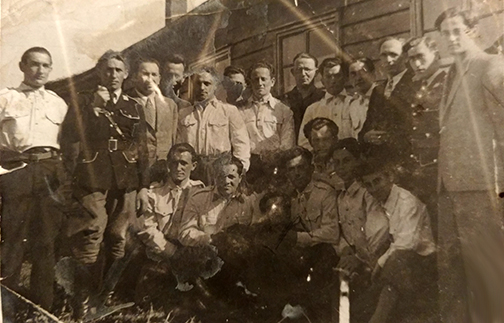
    I must say this is a remarkable site and extremely informative. But I have yet to find the Ukrainian DP Camp in Winzer, Germany. It was not large but this is where I spent the first two years of my life; where my parents met and were married. I am trying to put together a family history for our children and grandchildren. Do you have any information on this place? Winzer is located near Deggendorf where I was born. If you have any information, please advise. I have attached 3 photographs of the camp:

      My parent's wedding; - - - - - - - - - - - - - - - - - - - -- - - - - - - - - - - - - - - the kindergarten where my mom taught the children; and


      a group photo of the people living at the camp.

    I do know that it was a small camp with maybe 300 people living there. My parents have numerous photographs of weddings and group photos even the Police Dept., a choir, Christmas caroling, etc. We lived there from 1946-48 and then moved on to a huge building in Munich where we lived for a year prior to our leaving Germany for the USA. My dad tells me many stories but mom can no longer speak, she had a stroke 3 years ago. I need to put all this information on paper so that our future generations know who we were and we are. Thanks again for all your help. Daria (Maslihan) Bonomini email: bono@warwick.net
Wittmund
    http://www.wittmund.de/
    Municiple offices: Kurt-Schwitters Platz I, 26409 Wittmund
    Tel: 04462/983-0
    e-mail: rathaus@wittmund.kdo.de

    Stadt archive e-mail to: Hier Klicken elke.luerkens@stadt.wittmund.de
    or Tel.: 04462-983-220

Continue on to Wo - Z


If this site was helpful to you, please consider making a donation to keep it going.